Girls flag is becoming a school lane.
Programs need simple proof that supports development without turning every athlete into a scouting profile.
Flag football is fast, skill-heavy, and exploding across girls, boys, coed, school, and club programs. HyperPulse gives parents and coaches a training-grade proof layer for routes, cuts, sprint bursts, flag-pull windows, and session stories without GPS tracking or medical claims.
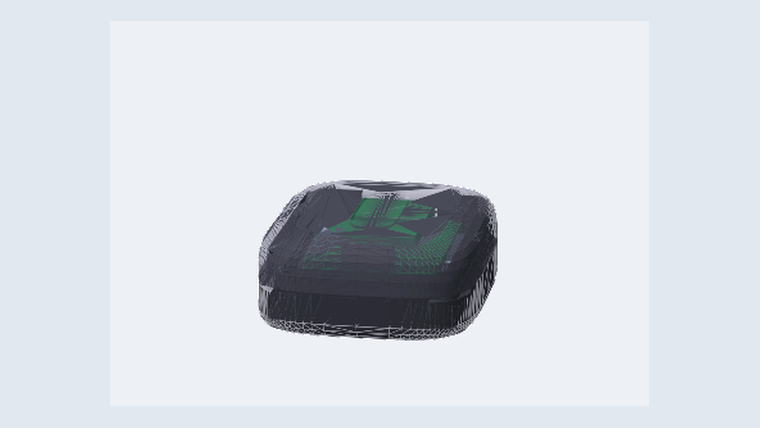
FLAG FOOTBALL | ROUTE BURST + CUTS + SESSION STORY
The sport is not just smaller tackle football. It is speed, spacing, first-step separation, defensive angles, route rhythm, and repeatable movement. That is exactly where a small no-GPS body sensor can create value.
Programs need simple proof that supports development without turning every athlete into a scouting profile.
Acceleration, cuts, route tempo, and freshness are easier to explain when the app turns movement into a clean session story.
Flag practices move quickly. HyperPulse can give the coach a roster view while parents still see one simple athlete story.
Show work, growth, and repeatability for female athletes without recruiting, scholarship, ranking, or official-timing claims.
Track first-step bursts, cut windows, route rhythm, and short-field acceleration for male athletes and coed groups.
Start with team pilots: coach-managed sessions, conservative placement, clear rules posture, and simple parent reports.
Measured items appear first because those are easiest to prove. Estimated items are motion-derived and need placement and field validation before stronger claims.
These labels keep the site honest while the product moves from prototype to field validation.
Directly read from the motion sensor or session clock.
Calculated from motion patterns; calibration and placement matter.
Validation workflow or roadmap metric that still needs field testing.
Flag metric
Feature: whole-session work. Function: aggregates motion intensity over the session. Benefit: see how much your athlete actually moved.
Flag metric
Feature: repeatable movement. Function: compares similar route and burst patterns. Benefit: see cleaner footwork, not just faster motion.
Flag metric
Feature: best-session highlight. Function: flags the athlete's strongest effort in their own history. Benefit: creates a simple win after practice.
Flag metric
Feature: first-step route burst. Function: detects explosive acceleration at route start. Benefit: shows who gets off the line with intent.
Flag metric
Feature: direction-change count. Function: counts hard turns and breaks. Benefit: makes real flag football movement visible.
Flag metric
Feature: open-space burst. Function: looks for high-output windows after a break. Benefit: shows when separation was likely created.
Flag metric
Feature: defensive reach and stop window. Function: flags quick decel and rotation moments. Benefit: gives defenders a training cue.
Flag metric
Feature: rhythm through routes. Function: compares cadence and acceleration shape. Benefit: helps athletes clean up timing.
Flag metric
Feature: post-catch acceleration. Function: tracks short sprint windows after catch or handoff. Benefit: shows run-after-catch style effort.
Flag metric
Feature: late-session quality. Function: compares late movement to early reps. Benefit: see when practice starts to wear down movement.
Flag metric
Feature: start response. Function: measures from a coach or app marker to first clear motion. Benefit: useful for snap, whistle, and first-step drills.
Flag metric
Feature: rules-aware setup. Function: keeps placement and mode guidance conservative. Benefit: helps teams test responsibly.
For flag football, the wedge is not official timing or live location. The wedge is the training story: how the route started, where the cut happened, whether the athlete kept their movement quality, and what the parent or coach can talk about after the session.
Wearable rules can vary by league, school, state, and event. HyperPulse should begin with practice, training, and evaluation pilots until a specific organization approves competition use.
These are starting points. Local implementation can be narrower than national language.
LA28 Flag Football NFHS Flag Football Rules of the Game NFL FLAG Girls Flag Football HyperPulse Wearables & RulesSpeed, separation, distance, and route context are motion-estimated, not GPS-certified field position.
HyperPulse can support training review, but it does not replace timing gates, officials, or event timing systems.
No safety, concussion, injury-prevention, return-to-play, scholarship, scouting, or eligibility claims.
Direct answers help parents, coaches, and search engines understand the lane without misquoting us.
Yes. HyperPulse can support girls flag football teams with training-grade movement context, route burst, cuts, freshness, and session stories.
Yes. The same Blade sensor and app can support boys flag football, coed leagues, camps, and training groups.
No. The current Blade is a no-GPS motion sensor. Speed, distance, separation, and route context are motion-estimated and training-grade.
Competition use depends on the league, school, event, officials, and governing-body rules. Start with practice, evaluation, and coach-controlled pilots.
No. The parent experience should focus on an athlete's own progress, personal-best markers, and session stories. Coach views can summarize groups without public kid rankings.
Start with a small girls flag, boys flag, or coed training group. We validate the device, placement, data flow, and whether the report helps parents and coaches talk about the session.